
How to Choose the Right Software Development Partner in 2026
Choosing the right software development partner in 2026 is no longer just a procurement decision, it’s a strategic business move.
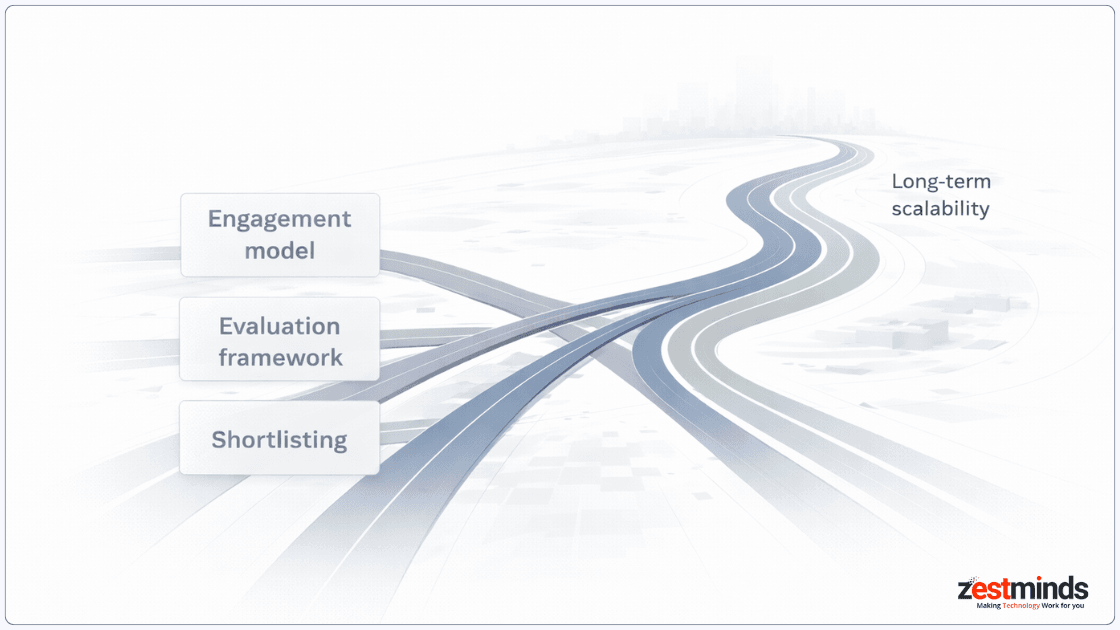
With AI-first products, distributed teams, and rising delivery complexity, the partner you choose directly shapes speed, quality, security, and long-term scalability. This guide helps you make three critical decisions: which engagement model fits your business, how to evaluate software development partners using a clear framework, and how to move from shortlisting to confident selection without unnecessary risk.

Why Choosing the Right Software Development Partner Matters in 2026
In 2026, software is not a support function. It is the business.
Whether you’re building a SaaS platform, modernizing legacy systems, launching an AI-driven product, or scaling an internal tool, your development partner becomes an extension of your leadership team. The wrong choice doesn’t just delay delivery, it compounds risk over time. This shift is widely recognized at the board level, as highlighted in McKinsey’s work on scale with Artificial Intelligence:
https://www.mckinsey.com/capabilities/tech-and-ai/our-insights/getting-to-scale-with-artificial-intelligence
A poor-fit partner can lead to:
- Repeated rework due to weak architectural decisions
- Security and compliance gaps discovered too late
- Products that don’t scale beyond the first version
- Loss of institutional knowledge when developers churn
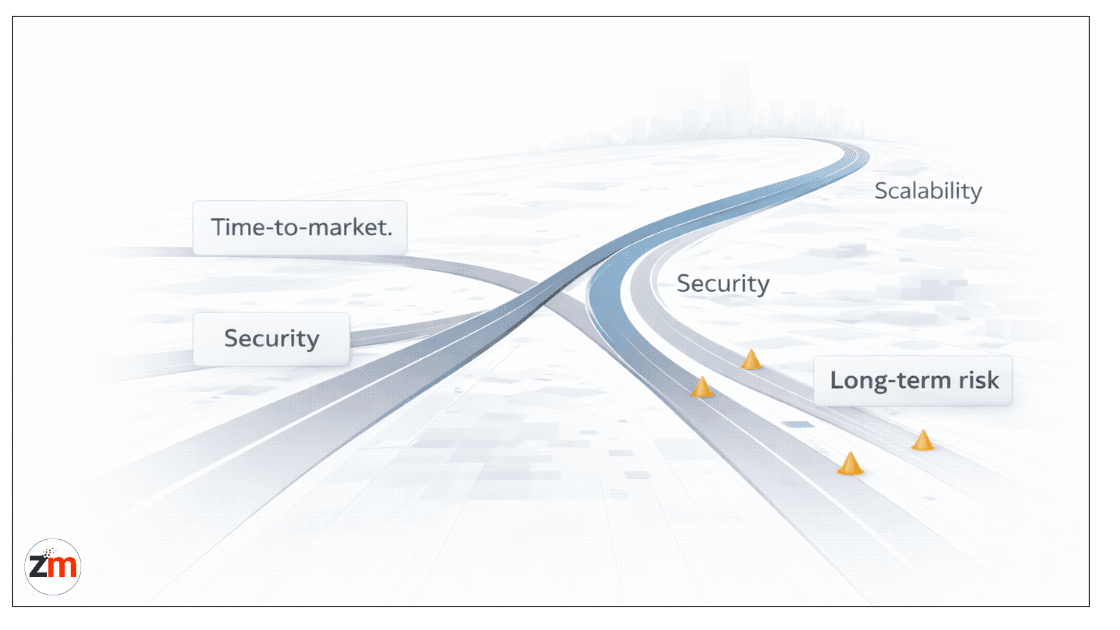
In earlier years, teams could “fix it later.” In 2026, that margin is gone, especially when products rely on AI integrations, data pipelines, and complex decision-making systems. If AI capability is central to your roadmap, it’s worth benchmarking what strong AI engineering and delivery discipline look like in practice, for example:
https://www.zestminds.com/ai-development-services
Think of a software development partner like a co-pilot, not a vendor.
A vendor follows instructions. A true partner questions assumptions, flags risks early, and helps you avoid costly mistakes before they reach production.
From a leadership perspective, this decision affects:
- Time-to-market: Delays directly erode competitive advantage
- Total cost of ownership: Cheap builds often turn into expensive systems
- Strategic flexibility: Your ability to adapt as markets and priorities shift
- Internal morale: Engineering chaos drains teams and leadership alike
In 2026, choosing well is less about finding the lowest bid and more about finding the right long-term collaborator.
In-House vs Outsourcing vs Hybrid: Which Model Fits Your Business?
Before evaluating who to work with, you need clarity on how you want to work. This choice sets the foundation for partner selection and directly influences cost, control, and execution speed. Many outsourcing failures stem from choosing the wrong engagement model, not the wrong partner. For a broader view of how companies structure global delivery today, Statista’s overview of the outsourcing market provides helpful context:
https://www.statista.com/topics/777/global-outsourcing/
In-House Development
Best suited for:
- Core IP-heavy products
- Highly regulated environments
- Long-term internal platforms
Advantages:
- Full control over priorities and quality
- Deep product and domain knowledge
- Strong cultural alignment
Limitations in 2026:
- Hiring senior engineers is slower and more expensive than ever
- AI, cloud, and security expertise rarely sits in one team
- Scaling capacity up or down is difficult
In-house teams excel at ownership but often struggle with speed and specialization.
Outsourced Development
Best suited for:
- MVPs and new initiatives
- Time-bound projects
- Accessing specialized expertise
Advantages:
- Faster team assembly
- Lower upfront costs
- Access to global talent pools
Risks if unmanaged:
- Misaligned incentives (delivery vs outcome)
- Knowledge silos
- Communication breakdowns
Outsourcing works particularly well for MVPs and early initiatives where speed, experimentation, and validation matter more than long-term internal ownership. If you’re assessing options for an MVP phase, this overview can help frame that decision:
https://www.zestminds.com/mvp-development
Hybrid Model (Most Common in 2026)
Best suited for:
- Scaling startups
- Enterprises modernizing systems
- AI and data-driven products
In this model:
- Core product ownership stays in-house
- External partners support execution, scale, or specialized modules
Why hybrid dominates in 2026:
It combines internal vision with external execution power. When managed well, it offers flexibility without sacrificing control.
In many hybrid setups, companies retain product ownership while extending delivery capacity by hiring dedicated developers for specific modules or timelines, especially when speed is critical but oversight can’t be compromised:
https://www.zestminds.com/hire-dedicated-developer
Comparison table of In-House, Outsourcing, Hybrid Model
| Engagement Model | Best Suited For | Advantages | Limitations / Risks |
|---|---|---|---|
| In-House Development | Core IP-heavy products; Highly regulated environments; Long-term internal platforms |
Full control over priorities and quality; Deep product and domain knowledge; Strong cultural alignment |
Hiring senior engineers is slower and more expensive; AI, cloud, and security expertise rarely sits in one team; Scaling capacity is difficult |
| Outsourced Development | MVPs and new initiatives; Time-bound projects; Accessing specialized expertise |
Faster team assembly; Lower upfront costs; Access to global talent pools |
Misaligned incentives; Knowledge silos; Communication breakdowns |
| Hybrid Model | Scaling startups; Enterprises modernizing systems; AI and data-driven products |
Internal vision with external execution power; Flexibility without sacrificing control |
Requires strong governance and clear ownership; Coordination complexity if unmanaged |
Key insight:
Your “right” partner depends on the model you choose. A team optimized for staff augmentation may struggle with product ownership, while a product-led partner may not suit pure capacity scaling.
Key Evaluation Criteria for a Software Development Partner
This is where many organizations misstep—judging partners on surface-level signals instead of using a structured partner evaluation framework.
Below is a practical framework used by experienced CTOs and product leaders to evaluate software development partners consistently across technical, delivery, and collaboration dimensions. If you prefer a checklist-style approach, this resource can help you organize your evaluation:
https://www.zestminds.com/blog/mvp-development-company-checklist-2025/
1. Technical Depth (Not Just Stack Familiarity)
In 2026, knowing a framework is table stakes. What truly matters is decision quality.
Evaluate:
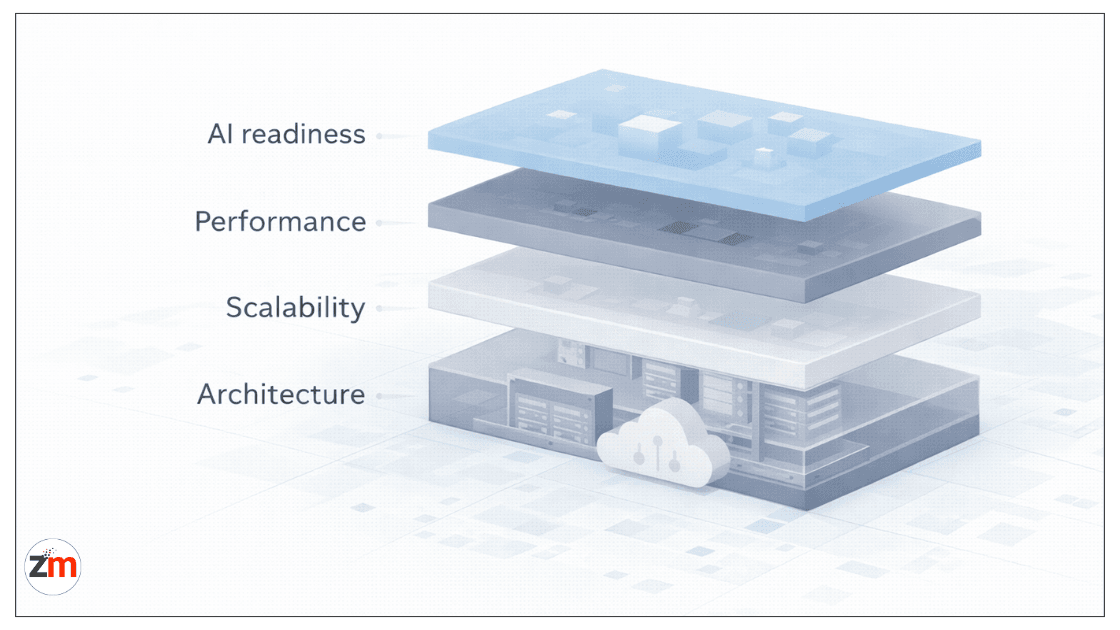
- How the team designs system architecture
- How they manage scalability and performance trade-offs
- Their approach to AI integration, data flow, and observability
For a widely accepted reference on sound architectural thinking, the AWS Well-Architected Framework offers a clear baseline:
https://aws.amazon.com/architecture/well-architected/
Red flag: Confidence without explaining trade-offs
Green flag: Clear reasoning, constraints, and alternatives
Ask why they would choose a particular approach, not just what they would use.
2. Product Thinking and Business Context
Strong partners don’t just build features; they understand why those features matter.
Look for:
- The ability to translate business goals into technical decisions
- Comfort pushing back on unclear or risky requirements
- Experience working closely with non-technical stakeholders
A partner who blindly follows instructions may feel easy to work with at first, but that approach often creates long-term problems.
3. Delivery Process and Predictability
In 2026, predictability matters more than raw speed.
Assess:
- How work is planned and tracked
- How scope changes are handled
- How progress and risks are communicated
Ask for examples of:
- Missed deadlines and how they were recovered
- Projects that changed direction mid-stream
You’re not looking for perfection, you’re looking for transparency and adaptability.
4. Communication and Time-Zone Overlap
Global teams succeed or fail on communication.
Consider:
- Overlap hours with your core team
- Clarity of written and verbal communication
- Who you interact with daily versus weekly
Important:
A highly skilled engineer with poor communication will still slow you down.
5. Quality Assurance and Security Mindset
Quality isn’t a phase, it’s a habit embedded in the delivery process.
Evaluate:
- Testing strategies (unit, integration, regression)
- Code review practices
- Security awareness and data handling
For a practical, globally recognized security baseline, OWASP Top 10 is a strong reference for what partners should design against:
https://owasp.org/www-project-top-ten/
In 2026, most security issues aren’t technical accidents, they’re process failures.
Common Mistakes and Red Flags to Avoid When Outsourcing
Even experienced teams repeat the same outsourcing mistakes.
Mistake 1: Choosing Based on Price Alone
Low-cost partners often optimize for:
- Speed over correctness
- Junior-heavy teams
- Short-term delivery with long-term consequences
Reality check:
If pricing seems unusually low, something else is likely being compromised, often quality, documentation, or senior oversight.
Mistake 2: No Clear Ownership Model
Clarify ownership early:
- Who owns architectural decisions?
- Who manages technical debt?
- Who responds to production issues?
If this isn’t explicit, problems tend to surface only when they become critical.
Mistake 3: Overpromising Without Evidence
Be cautious if a partner:
- Guarantees timelines without proper discovery
- Claims expertise in everything
- Avoids discussing risks or constraints
Strong partners are transparent about uncertainty.
Mistake 4: Ignoring Cultural Fit
Cultural misalignment often shows up as:
- Defensive communication
- Lack of accountability
- Blame-shifting
These issues compound over time and are difficult to correct later.
Global Outsourcing in 2026: Regions, Costs, and Trade-Offs
Global outsourcing isn’t a single decision, it’s a series of trade-offs.
North America & Western Europe
- Higher cost
- Strong communication and domain understanding
- Best suited for complex, high-stakes systems
Eastern Europe
- Strong engineering talent
- Moderate cost
- Balanced quality and affordability
South Asia
- Large talent pool
- Cost-effective
- Requires strong process and senior oversight
Latin America
- Time-zone alignment with the US
- Growing tech ecosystems
- Often effective for highly collaborative teams
Comparison table
| Region | Cost Level | Talent Depth | Collaboration Risk | Best Fit Scenarios |
|---|---|---|---|---|
| North America & Western Europe | Higher cost | Strong communication and domain understanding | Best suited for complex, high-stakes systems | |
| Eastern Europe | Moderate cost | Strong engineering talent | Balanced quality and affordability | |
| South Asia | Cost-effective | Large talent pool | Requires strong process and senior oversight | |
| Latin America | Growing tech ecosystems | Often effective for highly collaborative teams |
Key insight:
Region matters less than team composition, seniority, and process maturity.
How to Shortlist and Finalize the Right Development Partner
This is where evaluation turns into execution. At this stage, the goal is not to decide everything at once, but to move methodically from assessment to shortlisting and validation.
Step 1: Shortlist Based on Fit, Not Popularity
Ignore logos and brand names. Focus on relevance:
- Similar product complexity
- Comparable team size
- Familiar business model
Step 2: Run a Structured Discovery
A short, paid discovery phase reveals:
- Communication quality
- Technical judgment
- Working rhythm
Reviewing real-world case studies, especially in regulated or high-risk environments—helps validate whether a partner can execute beyond theory. For example, a HIPAA-grade build demonstrates disciplined delivery in practice:
https://www.zestminds.com/case-study-hipaa-compliant-ai-hospital-system
This approach is far less costly than discovering misalignment mid-project.
Step 3: Define Success Metrics Early
Align early on:
- Delivery milestones
- Quality expectations
- Communication cadence
Clear metrics make it easier to compare partners objectively during early collaboration.
Step 4: Start Small, Then Scale
The strongest partnerships grow gradually.
A successful pilot builds trust and creates a clear signal for whether the relationship should scale.
FAQs
How do I choose the right software development partner in 2026?
Focus on technical judgment, product thinking, communication quality, and long-term alignment, not just price or tools.
Is outsourcing software development still a good idea in 2026?
Yes. It works well when paired with strong governance, clear ownership, and the right engagement model.
What is the biggest mistake companies make when outsourcing?
Optimizing for short-term cost savings instead of long-term delivery quality and scalability.
Table of Content
- Why Choosing the Right Software Development Partner Matters in 2026
- In-House vs Outsourcing vs Hybrid: Which Model Fits Your Business?
- Key Evaluation Criteria for a Software Development Partner
- Common Mistakes and Red Flags to Avoid When Outsourcing
- Global Outsourcing in 2026: Regions, Costs, and Trade-Offs
- How to Shortlist and Finalize the Right Development Partner
- FAQs
Shivam Sharma
Before You Scale Further, Review the Architecture.
Let’s evaluate where your system stands — and where it may break under growth.
Schedule an Architecture Review 30-minute technical discussion. No obligation.