
Hire Dedicated Developers in India: Cost, Process & Startup Guide
Hiring dedicated developers in India can help startups and growing companies build faster, control development costs, and access experienced engineering talent without building a large in-house team too early.
But the real advantage is not just lower hourly rates. The bigger win is finding developers who understand product goals, communicate clearly, work in structured sprints, and can scale with your roadmap. This guide explains when it makes sense to hire dedicated developers from India, what it may cost, how to compare hiring models, and how to avoid common remote hiring mistakes.

Why Global Startups Hire Dedicated Developers in India
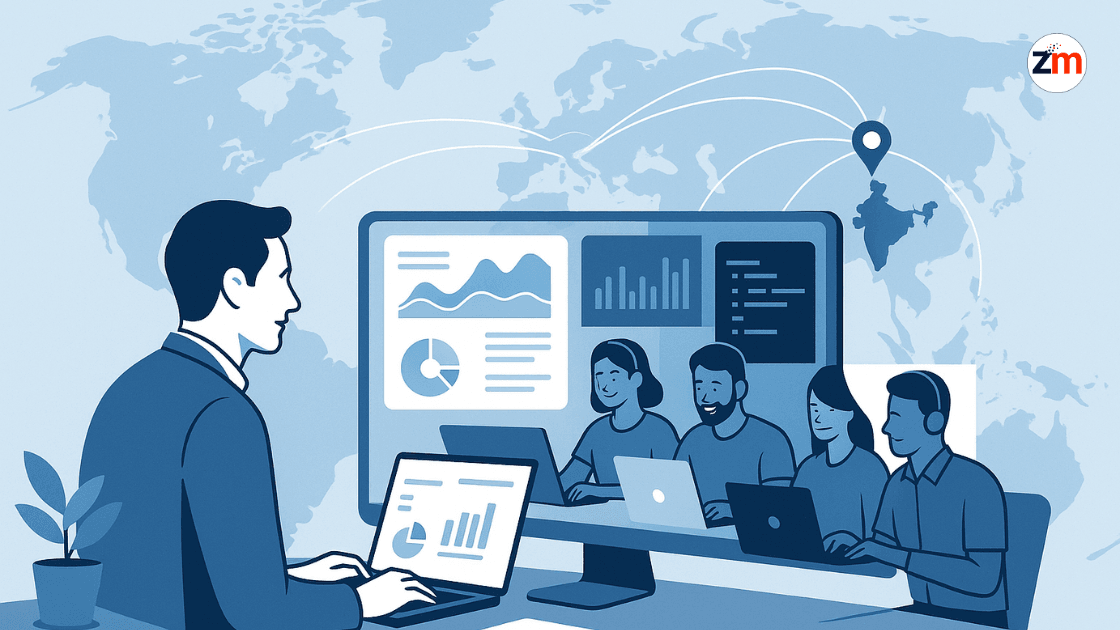
Every founder faces the same three challenges: time, talent, and cost. Hiring locally in the US, UK, Europe, or Australia can be slow and expensive, especially when a startup needs to build an MVP, ship new features, or scale an existing product team quickly.
India remains one of the strongest markets for remote software development because it offers a large engineering talent pool, experience with global clients, strong English communication, and practical exposure to modern product stacks. Industry reports such as NASSCOM’s technology sector review also continue to highlight India’s role in the global technology services ecosystem.
For many startups, the goal is not to replace the internal team. The goal is to extend it with reliable engineering capacity. A dedicated developer can work with your founder, CTO, product manager, or existing team and stay focused on your roadmap instead of jumping between random client tasks.
The right dedicated developer should feel like an extension of your product team, not a disconnected offshore resource.
This is why startups often choose Indian developers for SaaS platforms, MVPs, web apps, mobile apps, AI features, backend systems, internal tools, and long-term product support.
What makes the model attractive?
- Faster hiring: You can usually start faster than building a full in-house hiring pipeline.
- Cost control: You get access to strong engineering talent at a more efficient cost structure.
- Flexible scaling: You can start with one developer and add more roles later.
- Product focus: Dedicated developers stay aligned with your sprint goals and roadmap.
- Remote-ready collaboration: Teams are already familiar with Slack, Jira, GitHub, Zoom, Notion, and agile workflows.
When Should a Startup Hire Dedicated Developers in India?
Hiring dedicated developers from India makes sense when you need consistent product execution but do not want the cost, delay, and management load of building a large local team from day one.
This model is especially useful when your startup is in one of these situations:
- You need to launch an MVP: You have a product idea, wireframes, or early specs and need a small team to build version one.
- Your freelancer setup is becoming unstable: Tasks are moving, but ownership, quality, or communication is inconsistent.
- Your CTO needs execution support: The technical direction is clear, but the internal team needs more hands.
- You raised funding or got traction: You need to ship faster without immediately hiring a full-time local team.
- You need specialized skills: You require frontend, backend, mobile, DevOps, AI, or QA support for a specific roadmap.
- You want to reduce burn rate: You need reliable development capacity without spending like a large enterprise team.
Many founders start with MVP development services first, then move into a dedicated developer or team model once the product starts gaining traction.
How Much Does It Cost to Hire Dedicated Developers in India?
The cost to hire dedicated developers in India depends on seniority, technology stack, engagement model, project complexity, and whether you need one developer or a managed team.
In general, India can be significantly more cost-efficient than hiring developers in the US, UK, Western Europe, or Australia. Many startups may save 50% to 65% compared with local hiring, but cost should never be the only decision factor.
Typical cost factors
- Seniority: Senior developers cost more than junior or mid-level developers, but they usually reduce technical risk.
- Technology stack: AI, cloud, DevOps, security, and complex backend skills may cost more than standard web development.
- Engagement model: Full-time dedicated developers, part-time developers, and project-based models have different pricing structures.
- Product complexity: A simple web app costs less than a multi-tenant SaaS platform, AI product, marketplace, or regulated healthcare system.
- Management layer: If you need project management, QA, DevOps, or technical oversight, the total cost changes.
Developer hourly rate comparison
- United States: Often $100 to $120+ per hour depending on role and experience.
- United Kingdom: Often $85 to $100 per hour depending on seniority and stack.
- Australia: Often $90+ per hour for experienced software developers.
- India: Often $25 to $40 per hour for many dedicated development roles, with higher rates for advanced AI, cloud, architecture, or senior engineering needs.
Important: The cheapest developer is rarely the best developer. A low rate can become expensive if communication is poor, code quality is weak, documentation is missing, or no one owns delivery.
A better question is not “Who is cheapest?” It is “Who can build this properly, communicate clearly, and stay accountable as the product grows?”
Dedicated Developer vs Freelancer vs Agency vs Dedicated Team
Before hiring, it helps to understand which model fits your stage. Many founders lose time because they choose the wrong setup, not because the idea is bad.
Freelancer
- Best for: Small tasks, bug fixes, landing pages, or short-term support.
- Risk: Availability, accountability, and continuity can become problems.
- Use when: You have a clearly defined small task and can manage quality yourself.
Dedicated developer
- Best for: Ongoing product development where one developer can own a clear part of the roadmap.
- Risk: Works best when scope, communication, and reporting are clear.
- Use when: You need consistent engineering capacity but do not need a full team yet.
Dedicated development team
- Best for: Startups or companies that need multiple roles such as frontend, backend, QA, DevOps, UI/UX, or project management.
- Risk: Requires better sprint planning and clear ownership.
- Use when: You need a structured dedicated development team instead of one isolated developer.
Traditional agency project
- Best for: Fixed-scope projects with clear deliverables and limited ongoing changes.
- Risk: Less flexible if your startup roadmap changes quickly.
- Use when: Requirements are stable and you want the vendor to manage the full project.
For early-stage startups, a dedicated developer or small dedicated team is often more flexible than a fixed-scope agency project and more reliable than a freelancer-only setup.
Top Skills You Can Hire Dedicated Developers For
India’s development ecosystem has moved far beyond basic outsourcing. Many developers now work on SaaS platforms, AI products, cloud-native systems, marketplaces, healthcare apps, ecommerce platforms, and enterprise tools for global clients.
You can hire dedicated developers for different product needs:
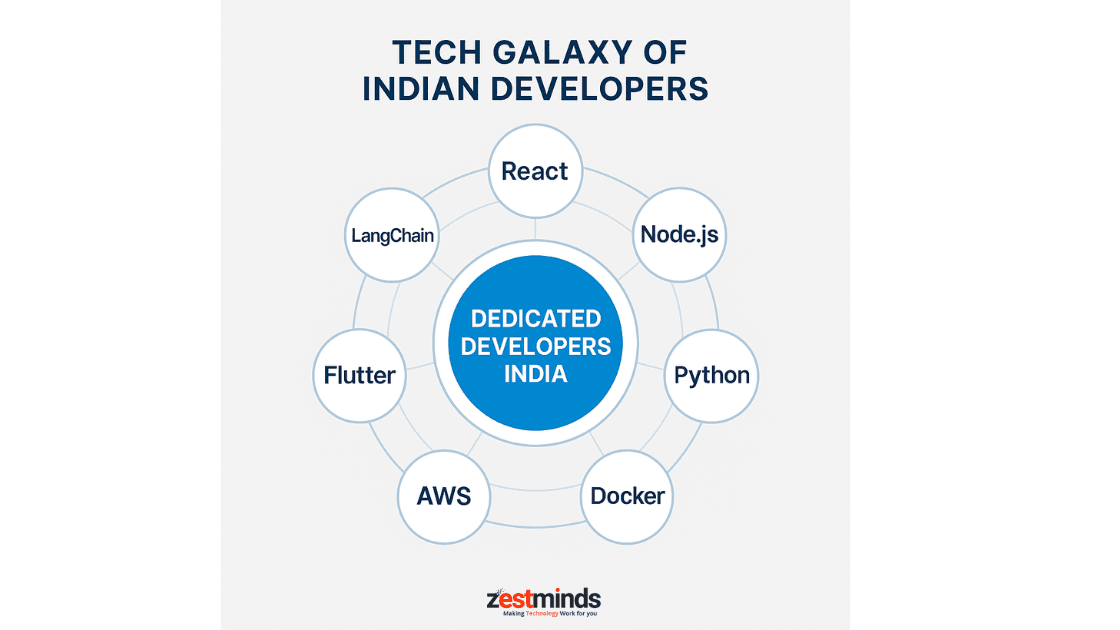
- Frontend development: React, Angular, Vue.js, Next.js, and modern UI development.
- Backend development: Node.js, Python, FastAPI, Django, Laravel, Go, .NET, and API development.
- Mobile app development: Flutter, React Native, Swift, Kotlin, and cross-platform app development.
- AI and machine learning: OpenAI API, LangChain, TensorFlow, PyTorch, AI workflows, and data-driven product features.
- Cloud and DevOps: AWS, Azure, Docker, Kubernetes, CI/CD, monitoring, and deployment pipelines.
- QA and testing: Manual testing, automation testing, regression testing, and release validation.
India’s AI talent base is also becoming stronger, with public reports highlighting growth in AI skill penetration and talent concentration. For startups, this matters because AI is moving from experimental demos into real product features, workflow automation, data analysis, and decision-support systems.
If you are building a subscription product, analytics dashboard, marketplace, or B2B platform, dedicated developers can also support long-term SaaS product development with feature releases, performance improvements, integrations, and ongoing maintenance.
How to Hire Dedicated Developers in India
Hiring right is not about luck. It is about clarity. Before you speak with any developer or development partner, define what success looks like for your product, your team, and your budget.
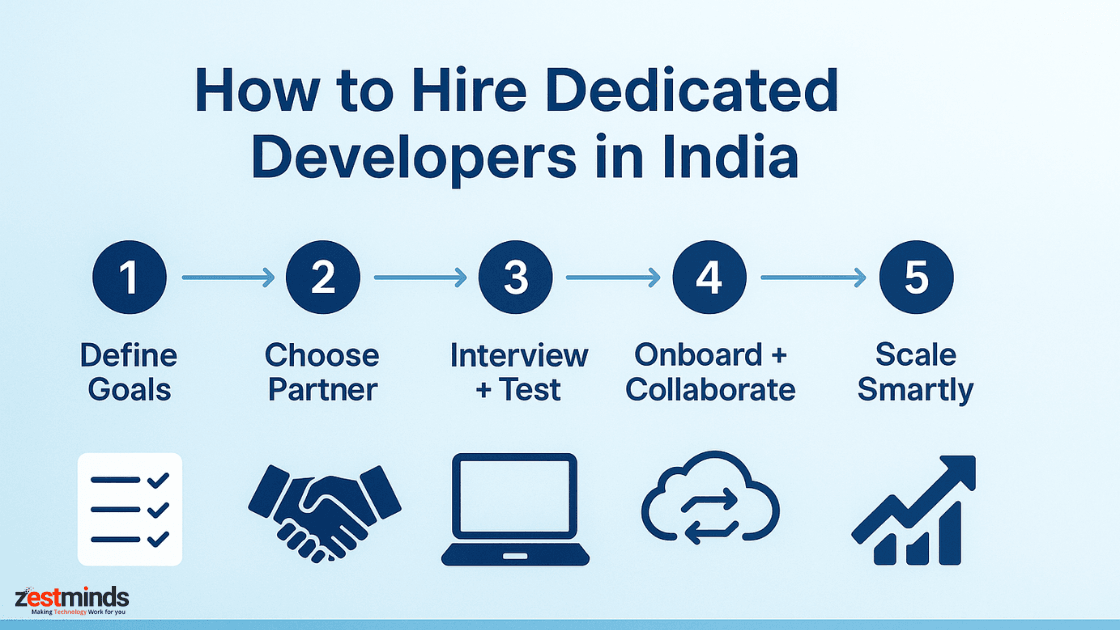
Use this 7-step checklist
- Define your product goals: Clarify what you are building, who it is for, and what must be delivered in the next 30, 60, or 90 days.
- List the required skills: Decide whether you need frontend, backend, mobile, AI, DevOps, QA, or full-stack development support.
- Choose the right hiring model: Decide whether you need one dedicated developer, part-time support, a small pod, or a full dedicated team.
- Review previous work: Look for relevant product experience, not just years of experience or a long technology list.
- Interview for ownership: Ask how the developer handles unclear requirements, code reviews, deadlines, communication, and technical trade-offs.
- Confirm NDA, IP, and access terms: Make sure code ownership, confidentiality, repository access, and handover expectations are clear.
- Start with a trial sprint: Begin with a focused sprint before scaling the engagement. This helps validate communication, quality, and delivery rhythm.
Questions to ask before hiring
- Can we interview the developer before starting?
- Who reviews the code?
- How are sprint updates shared?
- What happens if the developer is not the right fit?
- Who owns the source code and documentation?
- How is access to GitHub, cloud accounts, and internal tools managed?
- Can we start with one developer and scale later?
These questions protect you from hiring based only on hourly rate, which is one of the most common mistakes in offshore development.
How to Manage Remote Indian Developers Across US/EU Time Zones
Remote work is not a problem when the process is clear. Most issues happen when teams skip documentation, avoid sprint planning, or rely only on random calls and chat messages.
Indian developers can work smoothly with US and EU clients when there is planned overlap, clear task ownership, and a predictable communication rhythm.
Recommended collaboration setup
- Communication: Slack, Google Meet, Zoom, or Microsoft Teams.
- Project management: Jira, Trello, ClickUp, Linear, or Asana.
- Code collaboration: GitHub, GitLab, Bitbucket, pull requests, and code reviews.
- Documentation: Notion, Confluence, Google Docs, or internal product docs.
- Reporting: Weekly sprint summaries, demos, blockers, and next-step planning.
A simple weekly rhythm
- Monday: Sprint planning and priority alignment.
- Daily: Short async updates or standups.
- Mid-week: Blocker review and technical clarification.
- Friday: Demo, progress summary, and next sprint planning.
This rhythm gives founders and CTOs visibility without forcing them into micromanagement. You can also review how our remote development process works if you want to understand how Zestminds structures delivery, communication, and sprint visibility.
How to Avoid Hiring the Wrong Developers from India
Hiring from India can work very well, but only if you avoid the usual shortcuts. The biggest mistake is treating developer hiring like buying the lowest-priced commodity.
Red flags to watch for
- No clear interview process: You should be able to evaluate communication, technical depth, and problem-solving before starting.
- No code review process: Without review, technical debt can grow quietly.
- No NDA or IP clarity: Ownership, confidentiality, and source code access should be clear from the beginning.
- No sprint reporting: If updates are vague, it becomes hard to track progress and risks.
- No replacement or backup plan: Ask what happens if the developer is unavailable or not the right fit.
- Only selling low hourly rates: Cheap hourly rates are not useful if delivery quality is weak.
- No product understanding: A developer should understand the business goal behind the task, not just the ticket title.
The safest approach is to start with a focused sprint, review the delivery quality, and then increase the scope once the working rhythm is proven.
What You Get When You Hire Through Zestminds
Zestminds helps startups and growing companies hire dedicated developers from India with a practical, structured process. The focus is not just on providing resumes. The focus is on matching the right developer or team to your product stage, technology needs, communication expectations, and delivery goals.
Why teams work with Zestminds
- Developer shortlisting: Developers are shortlisted based on your stack, seniority needs, and product goals.
- Flexible engagement: You can hire hourly, part-time, full-time, project-based, or as a dedicated team.
- Technical oversight: Senior technical review helps reduce quality and architecture risks.
- Sprint visibility: You get structured updates, task tracking, demos, and delivery communication.
- Scale-up path: Start with one developer and add frontend, backend, QA, DevOps, mobile, or AI support as needed.
- NDA and IP clarity: Contracts, confidentiality, and code ownership are handled clearly before work begins.
If you want to check the kind of products Zestminds has helped build, explore our software development case studies.
Need a dedicated developer without freelancer risk? Zestminds can help you choose the right hiring model, shortlist suitable developers, and start with a clear sprint plan.
Conclusion
Hiring dedicated developers in India can be a smart move for startups and growing companies that need speed, flexibility, and strong engineering support without the cost of building a large local team too early.
The best results come when you treat this as a product delivery decision, not just a cost-saving decision. Look for communication quality, sprint discipline, code ownership, technical maturity, and long-term fit.
Key takeaways:
- India can offer strong cost efficiency, but quality and ownership matter more than the lowest rate.
- Startups can begin with one dedicated developer and scale into a larger team when needed.
- Clear scope, NDA, IP terms, reporting, and trial sprints reduce hiring risk.
- US and EU startups can work smoothly with Indian developers when overlap hours and sprint workflows are planned properly.
Not sure whether you need one developer or a full team? Talk to Zestminds and we’ll help you choose the right model based on your product stage, roadmap, and budget.
FAQs
How do I hire dedicated developers in India?
Start by defining your product goals, required skills, timeline, and seniority level. Then shortlist developers or a managed team, interview them, confirm NDA and IP terms, and begin with a focused trial sprint.
How much does it cost to hire dedicated developers in India?
The cost depends on seniority, technology stack, engagement model, and project complexity. India is usually more cost-efficient than the US or UK, but the cheapest option is not always the safest.
Why do startups hire dedicated developers from India?
Startups hire dedicated developers from India to reduce hiring costs, access experienced engineering talent, move faster, and scale product teams without building a large in-house team too early.
Is it better to hire freelancers or dedicated developers?
Freelancers can work for small tasks, but dedicated developers are better for ongoing product work where consistency, communication, code ownership, and long-term accountability matter.
Can I hire one developer first and scale to a team later?
Yes. Many startups begin with one dedicated developer and later add frontend, backend, QA, DevOps, mobile, or AI engineers as the product grows.
How do I protect my IP when hiring developers from India?
Use a clear contract, NDA, IP ownership terms, controlled repository access, and documented handover processes. A professional development partner should make these terms clear before work begins.
Can Indian developers work with US and EU time zones?
Yes. Most India-based remote teams work with planned overlap hours, async updates, sprint reviews, and tools like Slack, Jira, GitHub, and Google Meet to keep communication smooth.
What skills can I hire dedicated developers for?
You can hire developers for frontend, backend, mobile, SaaS, AI, cloud, DevOps, QA, and full-stack product development, depending on your product stage and technical needs.
Table of Contents
- Why Global Startups Hire Dedicated Developers in India
- When Should a Startup Hire Dedicated Developers in India?
- How Much Does It Cost to Hire Dedicated Developers in India?
- Dedicated Developer vs Freelancer vs Agency vs Dedicated Team
- Top Skills You Can Hire Dedicated Developers For
- How to Hire Dedicated Developers in India
- How to Manage Remote Indian Developers Across US/EU Time Zones
- How to Avoid Hiring the Wrong Developers from India
- What You Get When You Hire Through Zestminds
- Conclusion
- FAQs
Arshdeep Kaur
Before You Scale Further, Review the Architecture.
Let’s evaluate where your system stands — and where it may break under growth.
Schedule an Architecture Review 30-minute technical discussion. No obligation.